Can be mixed with Arminianism.
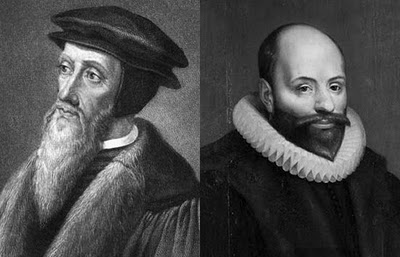 A common myth or caricature of Calvinism is that it can be mixed with the opposing viewpoint. This view is commonly espoused when someone remarks that they’re a two or four-point Calvinist (a Calminian if you will) or when degrees of Calvinism are discussed (“strong” or “weak” Calvinism which are usually shorthands for hyper-Calvinism and just normal Calvinism). Unfortunately, this viewpoint is not correct. Steve Cowan noted the necessary linkage between all five points. He said:
The five points of Calvinism, however, besides being drawn inductively from Scripture, are all logically dependent upon each other. They represent a closed system in which Biblical date are carefully balanced in order to achieve a consistent picture of Christian theology. Even critics of Calvinism concede this fact. I. Howard Marshall, for instance, remarks that “the systematic formulation of Christian dogmatics by Calvinist theologians leads to a set of basic and mutually related principles. When one rejects or distorts any point of the Calvinist system he ceases to be a Calvinist in any meaningful sense of the word. He is then dealing with an entirely different theological formulation.
Furthermore, in spite of common ground, Calvinism and Arminianism are incommensurable systems of Christian theology; on issues crucial to both there is no stable middle ground between them. Any theological system that denies the doctrine of total depravity or posits a loophole for its radical, anthropological and soteriological implications is by definition not Calvinist. Calvinism, at its foundational level, is committed to monergism. Synergism in soteriology belongs to a different brand of theology all together. Those who hold to the “moderate Calvinist” position are more aptly titled “moderate Arminians” because of what they have in common with that system; especially its notions of libertarian freedom.
 Roger Olson in his book Arminian Theology: Myths and Realities, agrees with most Reformed theologians in rejecting the idea of a hybrid. He said:
On several crucial issues related to soteriology, no middle ground or hybrid between Calvinism and Arminianism is logically possible. Calminianism can only be held in defiance of reason; ultimately Calminianism turns out either to be a disguised form of Calvinism or Arminianism, or it slides inexorably into one or the other. Many people claim to be “four-point Calvinists,” by which they usually mean they agree with totally depravity, unconditional election, irresistible grace, and perseverance of the saints but reject limited atonement. When pressed, however, such four-point Calvinists often turn out to have misunderstood the Calvinist idea of limited atonement…Some Arminians call themselves “two-point Calvinists,” especially if they live, work, and worship in contexts where Reformed theology is considered the norm for evangelicalism…by rejecting [a tenant of the system], they show that they are really Arminians or not Calvinists at all.
This myth should be considered for what it is, just that.
Is not the only system taught in Scripture (it also teaches Arminianism).
Some will say that certain passages of Paul or even Jesus for that matter surely teaches points of Calvinism but other passages in the Old Testament or other places teaches some facade of Arminianism. This is not even possible for two reasons: it violates the law of non contradiction and it undermines what Scriptures says about itself. The law of noncontradiction ~(p & ~p) states that nothing can both be and not be at the same time in the same respect. Nothing can posses incompatible properties; that is, nothing can be what it is not. Relating to the Calvinism/Arminianism debate, the statements that “you can lose your salvation” and “you cannot lose your salvation” cannot both be true. It is either one or the other.
 Those who hold to this idea really have a problem with what Scriptures teaches about itself and the nature of God himself. In evangelical theology, the doctrine of the inspiration of Scripture is defined as the Holy Spirit’s superintending over the writers [of Scripture] so that while writing according to their own styles and personalities, the result was God’s Word written—authoritative, trustworthy, and free from error in the original autographs. The core of the doctrine is the acknowledgement that “all Scripture is God-breathed” (2 Tim. 3:16) and that the writers of Scripture “spoke from God as they were carried along by the Holy Spirit.” (2 Pet. 1:21) The evangelical doctrine appreciates the dynamics of human personality in the inspiration process (Ecc. 12:9-10; Luke 1:1-4; John 20:30-31, 21:24-25) yet affirms the supremacy of God’s intentions and supervision. Scripture is truly the written word of God [rising] above the personalities of those who wrote it and above cultures in which it was written, reflecting the omniscience, truthfulness, and immutability of God himself. If Scripture really is the emanation of the will of God (2 Tim. 3:16) and God cannot lie or bear false witness about himself, then this claim is demonstrably false. What is more likely is that anyone asserting this myth isn’t correctly interpreting a passage of Scripture.
Necessarily entails believing everything Calvin believed
This idea is false because of the presence of various theologians, pastors, and scholars who are theologically Reformed and denominationally not associated with the Presbyterian or Reformed churches. One can certainly have a different viewpoint of the Lord’s supper but believe wholeheartedly with the Reformed perspective concerning the doctrine of salvation. The idea that believing in Calvinism necessarily entails believing everything Calvin himself believed is turned upside down with the recognition that John Calvin himself was not the first Calvinist, that he was not the only shaper of the Reformed tradition, and that the pastor/scholar never identified the five points let alone the doctrines of predestination or divine sovereignty as the center of Reformed theology. The Reformed believe that Scripture explicitly teaches the five points of Calvinism and variations of the points can be found in the works of Augustine, Bernard of Clairvaux, Archbishop Thomas Bradwardine, Gregory Rimini, and many others. Other Church leaders were also pivotal in the construction of the Reformed faith such as Martin Luther, Thomas Cranmer, Ulrich Zwingli, John Knox, Heinrich Bullinger, and many others. Lastly, Calvin spoke of the doctrine of justification as “the primary article of the Christian religion.”
Does away with an age of accountability
Many Reformed theologians believe in the doctrine of the age of accountability such as John Piper and John Macarthur. Arguments for the doctrine can be found here. Other Reformed writers opt for a more agnostic viewpoint concerning what happens to children when they die young. Regardless, there is no necessary link between believing in Calvinism and the nonbelieving that God saves children who die young based upon the merits of Christ.
Lays a system on Scripture
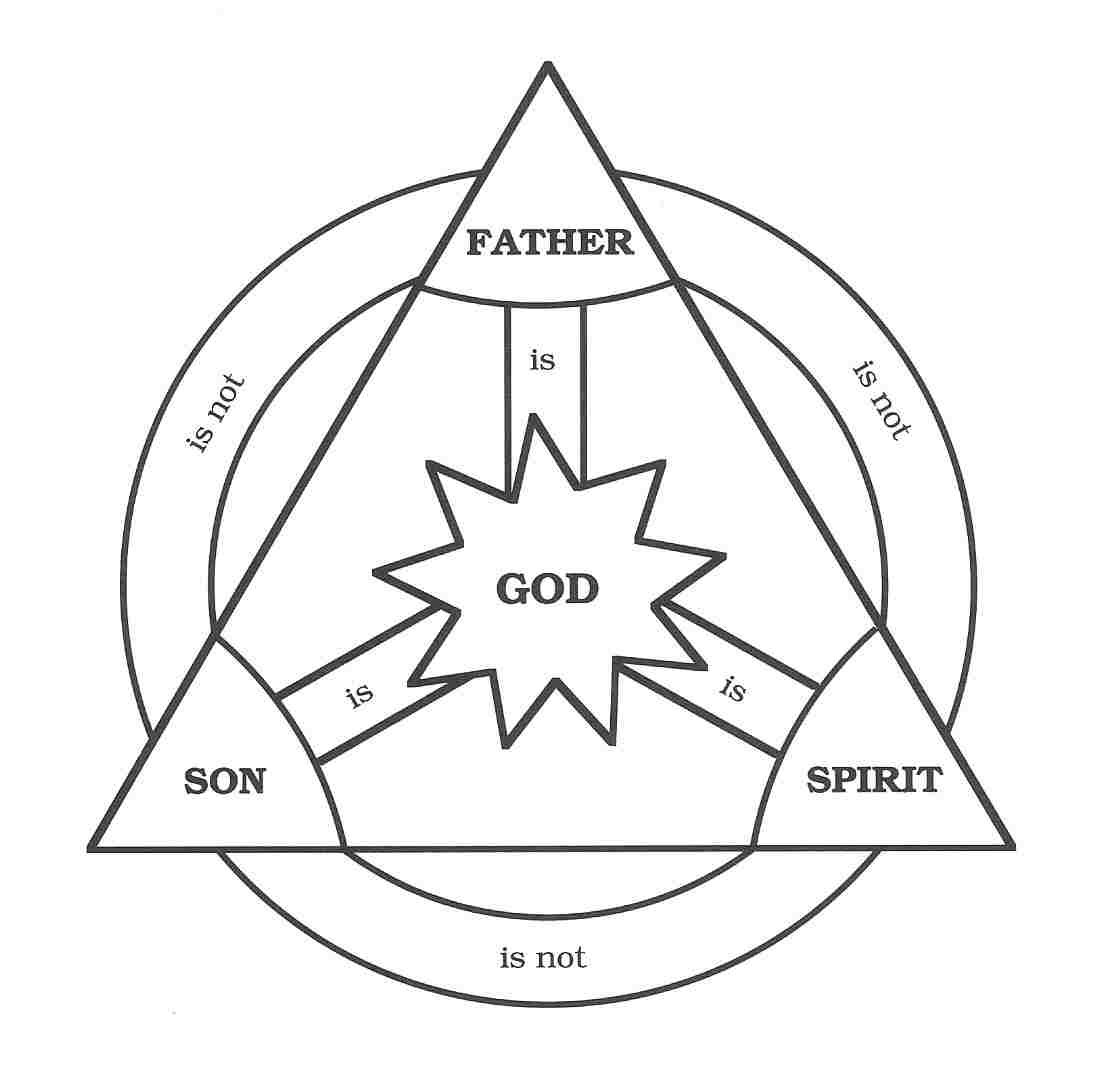 The Reformed see the system of Calvinism much like most orthodox Christians see the system of Trinitarianism in the Scriptures. Christians believe that God exists as a Trinity. The Bible teaches two clear things: 1) there is one God and 2) there are three persons referred to as God within the Scriptures. What does this mean? It means that God exists as one being or essence yet exists as a plurality within himself. Instead of being a strict unitarian monotheist, Christians are trinitarian monotheists. Although not itself a biblical term, “the Trinity” has been found to be a convenient designation for the one God self-revealed in Scripture as the Father, Son, and Holy Spirit. It signifies that within the one essence of the Godhead we have to distinguish three “persons” who are neither three gods on the one side, nor three parts or modes of God on the other, but coequally and coeternally God. A barebones definition of the doctrine of the trinity is “God eternally exists as three persons, Father, Son and Holy Spirit, and each person is fully God, and there is one God.” The doctrine of the trinity was a progressively revealed doctrine found within the OT and NT. It is a way of looking at how the Father is described, how the Son is described, and how the Spirit is described and logically ascribing to them their attributes as laid out in Scripture. Calvinism no more lays a system on Scripture any more than Trinitarianism. It is merely an attempt to believe and systematize what Scripture teaches on one subject.
Worships the man John Calvin.
This idea is patently false because Calvinists obviously worship Jesus. Most people who say this are rather implicitly revealing a hint of anti-intellectualism. “Christianity is not about logic, knowledge, or beliefs but about a feeling, a relationship, or a presence.” The life of the mind is crucially linked to the Christian life because God has revealed himself through a piece of literature and the world around us. John Piper in his book The Pleasures of God: Meditations on God’s Delight in Being God said:
…We should be eager to investigate all the works of God, all the traces of God’s influence, and all the evidences of God and pointers to God in nature and in his Word. For God has ordained that “the Light of the knowledge of the Glory of God in the face of Christ” (2 Cor. 4:6) shine with self-evidencing brightness in and through objective, historical communications of himself through deeds and his words. God does not take pleasure merely in being known and loved in an abstract way disconnected from his work in Creation and redemptive history. God created the world and has worked in history not so that Creation and history would be ignored. Christ did not become a man so that the story of his life and work recorded in a book would be disregarded in favor of a mystical bypass to God. This would not honor the Christ of history.
 God has given the Church pastors and teachers to train up the body of Christ unto all maturity (Eph. 4:11-13). To discount orthodoxy, to belie higher education as idol worship, to reject the use of commentaries and other books and what they teach is to spit in the face of years of scholarship and, as a lay person, set yourself up as the authority of what is most likely in the text. To perform the job of handling the Word correctly, one must study Biblical languages, contemporary biblical cultures, and hermeneutics in a broad spectrum. In explanation, if one wants to know the right things about God and the world, they need to study. Studying the works of Calvin or any other great person in Church history is not idol worship, its I AM worship. Phillip Schaff once asked, “How shall we labor with any effect to build up the Church, if we have no thorough knowledge of her history, or fail to apprehend it from the proper point of observation? History is, and must ever continue to be, next to God’s Word, the richest foundation of wisdom, and sweet guide to all successful practical activity.” This myth and the anti-intellectualism associated with it should be rejected. We do not have the luxury of ignorance any longer in the midst of a needy culture that has ten thousands of smokescreen objections to the truthfulness of Christianity.






 Austin's Blog
Leave a comment