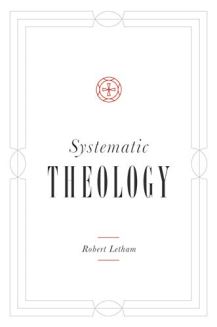
 In his recent work, Presbyterian professor Robert Letham describes the Bible’s authority as connected to its origin, noting this to be the classical Reformed approach to such a discussion. Following The Westminster Confession of Faith Chapter 1:4, the theologian notes that “The origin of Scripture, its being inspired by God, is the basis for its authority over the Church. It is independent of the church’s testimony. Scripture’s authority depends wholly on God, its author.”[1] He goes on to write that Jesus deputized the apostles and their writings and invested them with his own authority. The Scriptures, and not the decrees and decisions of church councils, are the only basis for unerring authority and truth. With God as their author, the works of the Bible can be trusted.
Letham deliberates on the question of how one comes to believe the Bible is the Word of God by examining the confession again. He says, “There are various ways Scripture displays its exalted nature, each of which has a certain degree of persuasiveness but by itself stops short of convincing us.”[2] While reflecting on the “exalted nature” of the Bible has produced great works and is spiritually edifying, only the work of the Holy Spirit convinces one that the Bible bears epistemological weight. Why does it take the witness and work of the Holy Spirit? First, we are sinful people and will malign and disbelieve the revelation of God. Second, it makes since the Holy Spirit would be the convincing agent of revelation since he is the creative source and means of that revelation.
 Of special interest is Robert Duncan Culver’s lack of chapter on bibliology. He notes that one of the most successful orthodox and evangelical systematic theologies of all time lacks such a chapter as well (i.e. Louis Berkhof’s Systematic Theology) yet relies unapologetically on the veracity, integrity, inspiration, and divine authority of the Canon of the sixty-six books of the Old and New Testament.[3] He also believes many systematic theologians spend too much time on the doctrine of Scripture and neglect other topics such as theology proper and Christology. He affirms, “The words of Scripture, not merely the ideas, are God’s Word, without error in original documents, true and of divine authority.”[4] Culver freely quotes Scripture as the oracles of God and as having the final say in theological matters (over and against councils, popes, religious teachers, experience, or tradition). He even notes that prophecy and miracles attest to the Bible’s supernatural origin. He writes, “…the connection of this supernatural power [predictive prophecy] with the miracles of Scripture, the relation of both miracles and prophecy with the Jewish people and the claims of their prophets, apostles and Messiah, that makes the case for Christianity an infallible one.”[5] The Scriptures themselves claim to be from God and evidence such a claim in their transformative power to redeem and save sinful men and women.
[1] Robert Letham, Systematic Theology. (Wheaton: Crossway, 2019), 189.
[2] Ibid., 199.
[1] Robert Duncan Culver, Systematic Theology: Biblical and Historical. (Mentor/Christian Focus, 2006), xvi.
[2] Ibid., xvii.
[3] Ibid., 16.




 Austin's Blog
Leave a comment