

I hear people often ask if we will recognize our loved ones or each other in Heaven. It has always struck me as an odd question. Why would we not recognize people in Heaven? First, the disciples recognized Jesus after the resurrection (John 21:12; Matt. 28:16-17; Luke 24:31), though occasionally He veiled His presence (Luke 24:15-16; John 20:14). Our bodies will be like His glorious body when we are resurrected. Paul says in Philippians 3:20-21, “But our citizenship is in heaven, and from it we await a Savior, the Lord Jesus Christ, who will transform our lowly body to be like his glorious body, by the power that enables him even to subject all things to himself.” If the disciples could recognize Jesus after His resurrection, it stands that we will be able to recognize each other after our own. There’s continuity between the person you are now and the person you will be after God does His glorious work of recreation and resurrection.

Second, we will not become more ignorant in Heaven than we were on earth. We will continue to grow in our knowledge, wisdom, and insight. Heaven will not be static and it does not seem to be the case that all knowledge will essentially be downloaded into our minds the moment we enter Heaven. We will never become omniscient, for only God possesses that attribute. Sam Storms encourages people to think about angels in Heaven and their knowledge. He writes, “Consider the angels. They are perfect and sinless, yet their knowledge increases and their joy intensifies. They desire to look into the things of redemption (1 Peter 1:12) and rejoice when a sinner repents (Luke 15:7,10). Clearly, growth of insight and new grounds for joy characterize angelic experience in heaven. If this be true of them, why not of us?” Just as the angels continue to increase in delight and knowledge, so will redeemed saints.
Moreover, the object, source, and goal of our knowledge will be the infinite God and delighting in Him. Puritan Jonathan Edwards notes of believers in Heaven, “Therefore, their knowledge will increase to eternity; and if their knowledge, doubtless their holiness. For as they increase in the knowledge of God and of the works of God, the more they will see of his excellency; and the more they see of his excellency . . . the more will they love him; and the more they love God, the more delight and happiness . . . will they have in him.” What does this mean? We won’t forget our loved ones in Heaven because we aren’t becoming ignorant, uninformed, or oblivious in eternity. We grow in our knowledge.

I might need to be reintroduced to Gabriel though when I get there. Why? What he will be will likely overpower and overwhelm my senses. C.S. Lewis writes of the transformation of believers saying, “…He will make the feeblest and filthiest of us into a…dazzling, radiant, immortal creature, pulsating all through with such energy and joy and wisdom and love as we cannot now imagine, a bright, stainless mirror which reflects back to God perfectly (though, of course, on a smaller scale) his own boundless power and delight and goodness. The process will be long and in parts very painful, but that is what we are in for. Nothing less. He meant what He said.”
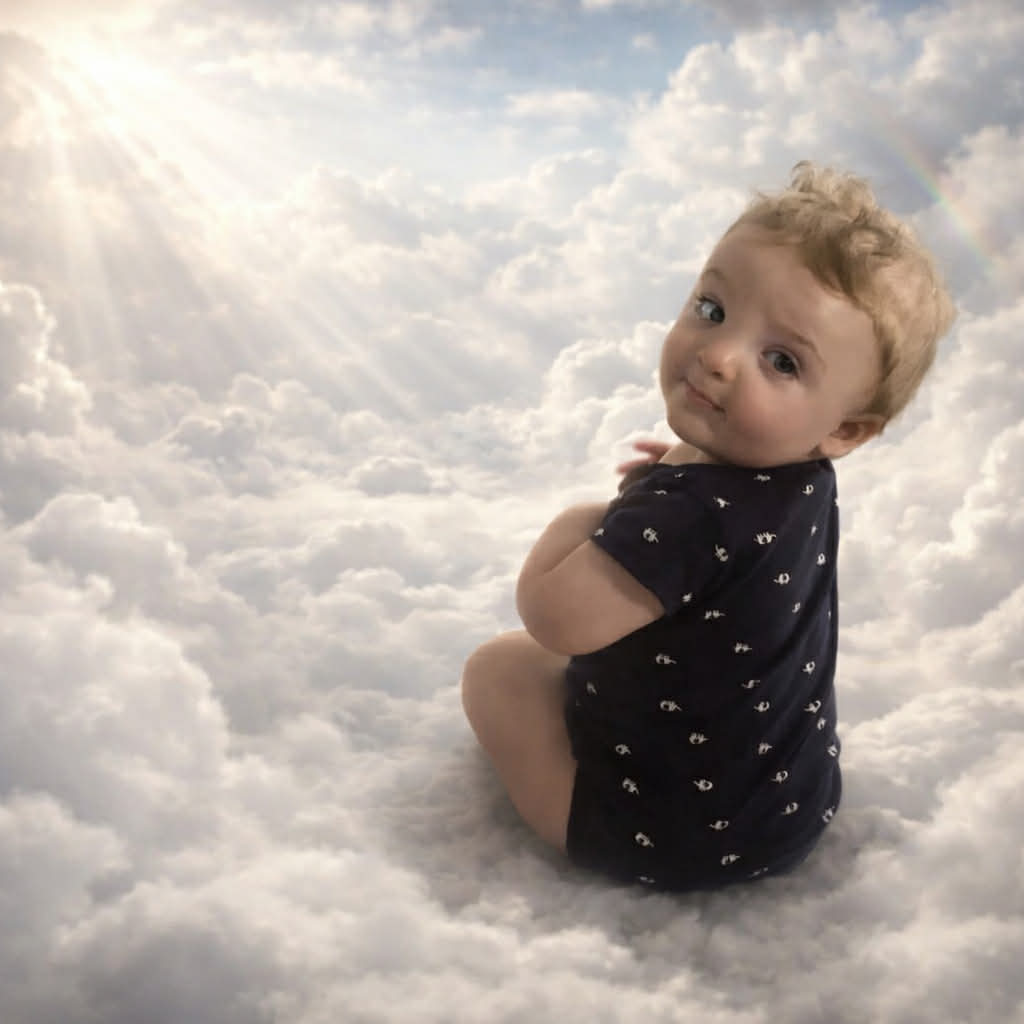
I thought my son was perfectly beautiful, radiant, and precious here. How much more will I think it when I arrive in Heaven and he has been there a while in the presence of purity, perfection, goodness, beauty, and truth Himself? Of course, we will know our loved ones in Heaven but when we get there, our reunion may require a reintroduction because they will have been baptized and bathed in resurrection radiance and resplendence. 1 Corinthians 2:9 says, “What no eye has seen, what no ear has heard, and what no human mind has conceived”—the things God has prepared for those who love him.”



 Austin's Blog
Leave a comment