
1-People in Heaven don’t know what is happening on earth.
Myth: People in Heaven are completely unaware of everything on earth.
Truth: People in Heaven are aware of what’s going on in history and long for the End of history.
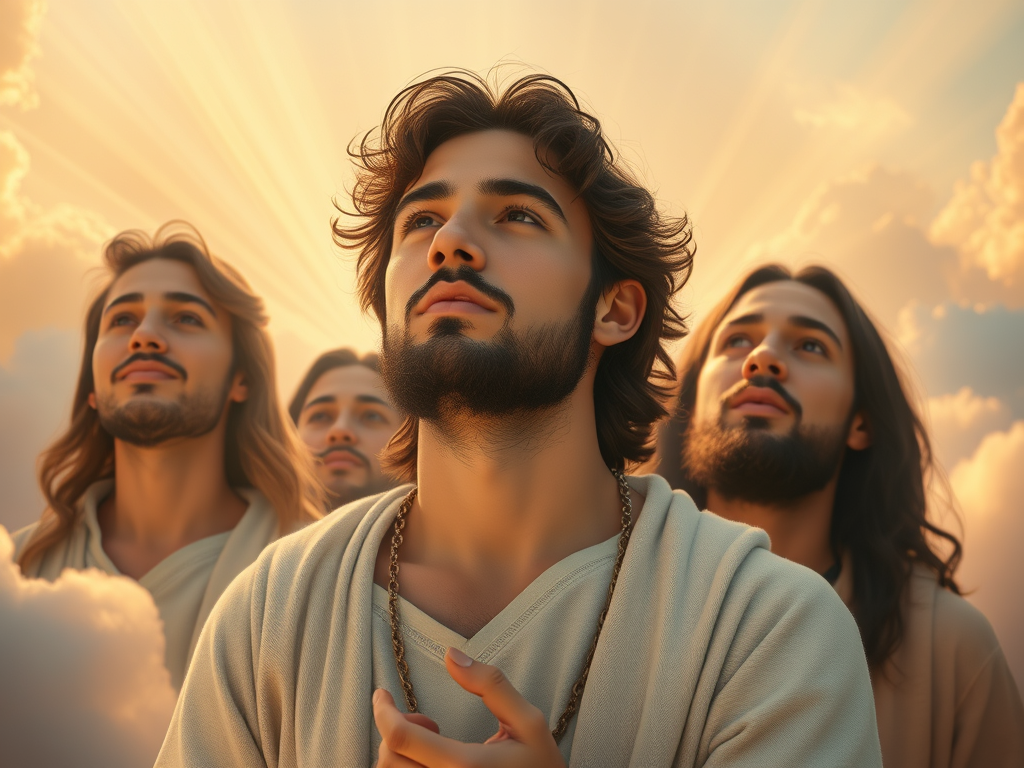
While the Bible doesn’t fully explain this, various passages suggest that those in Heaven may have some awareness of Earth, though they see it through a heavenly perspective. Hebrews 12:1 describes Old Testament saints mentioned in chapter 11 as a great cloud of witnesses, which may imply they are witnessing our walks with God on earth. In Revelation 6, the “souls under the altar” ask God, “O Sovereign Lord, holy and true, how long before you will judge and avenge our blood on those who dwell on the earth?”
They are aware that human history has not reached its final end and justice has not occurred. Writing on this passage, Donald G. Bloesch notes, “Yet because of their identification with the sufferings and tribulations of the church militant on earth, the saints in paradise are keenly aware that the perfection of all things is still in the future. Their state is one not only of beatitudo but also of expectatio, expectation and waiting. Though they have the vision of God, they await the general resurrection of the dead at the second advent of Christ.” Pierre-Yves Emery maintains that the departed saints “will wait until the end of the world for us, the believers still on earth, to fulfill their ministry, their works, their crown, their joy.”
Other verses also imply that saints above know what’s happening below. Luke 15:7-10 mentions angels and others rejoicing over sinners who repent and place their faith in Christ. In Revelation 18:20, Christians in Heaven praise God saying, “Rejoice over her, O heaven, and you saints and apostles and prophets, for God has given judgment for you against her!” This implies that saints in heaven are aware of God’s judgments on earth and are called to rejoice over them. Though it is a parable and we must be careful in pressing the details beyond what the author intended, the rich man of Luke 16:19-33 in Hades shows awareness of his family’s spiritual condition on earth, asking Abraham to send Lazarus to warn them. In Matthew 17:1-3, Moses and Elijah, though long dead, appeared at the transfiguration of Jesus, conversing with Him about His upcoming death. Their participation suggests awareness of God’s plan on earth. All of these verses seem to point to the reality that those who have gone on ahead are aware of things that are happening on earth. It is likely the case though that their focus is not what it was while on earth.

2- There are baby angels.
Myth: Heaven is full of cuddly, baby angels on clouds.
Reality: Angels are not said to procreate.
The Bible does not specifically describe angels as babies or even as female. Angels are typically referred to in the Bible using male pronouns (“he” or “him”) and often appear as men when described visually (Gen. 18:2; Mark 16:5). However, angels are spiritual beings (Heb. 1:14) and do not have human gender or procreate (Matt. 22:30). The idea of “baby angels” likely comes from Renaissance art, where cherubs (cherubim) were depicted as chubby babies with wings.
3- Heaven is up there in the clouds.
Myth: Heaven is above us towards the sky or space.
Reality: A lot of the “upward” language in Scripture is symbolic.
While many people imagine Heaven as being “up there” in the clouds, the Bible presents a more nuanced view. Heaven is described as God’s dwelling place, a spiritual realm beyond the physical universe where His presence is fully manifested (Psa. 103:19; Rev. 21:3). It is not confined to a specific location in the sky, as God is omnipresent, existing everywhere at all times (Jer. 23:24). The imagery of clouds or heights in Scripture often symbolizes God’s transcendence and majesty rather than a literal geographic location (Isa. 55:9). Revelation 21-22 points to a new heaven and new earth, where God will dwell with His people in a restored creation, emphasizing Heaven as relational and eternal communion with God rather than merely a far-off, physical place.




 Austin's Blog
Leave a comment