
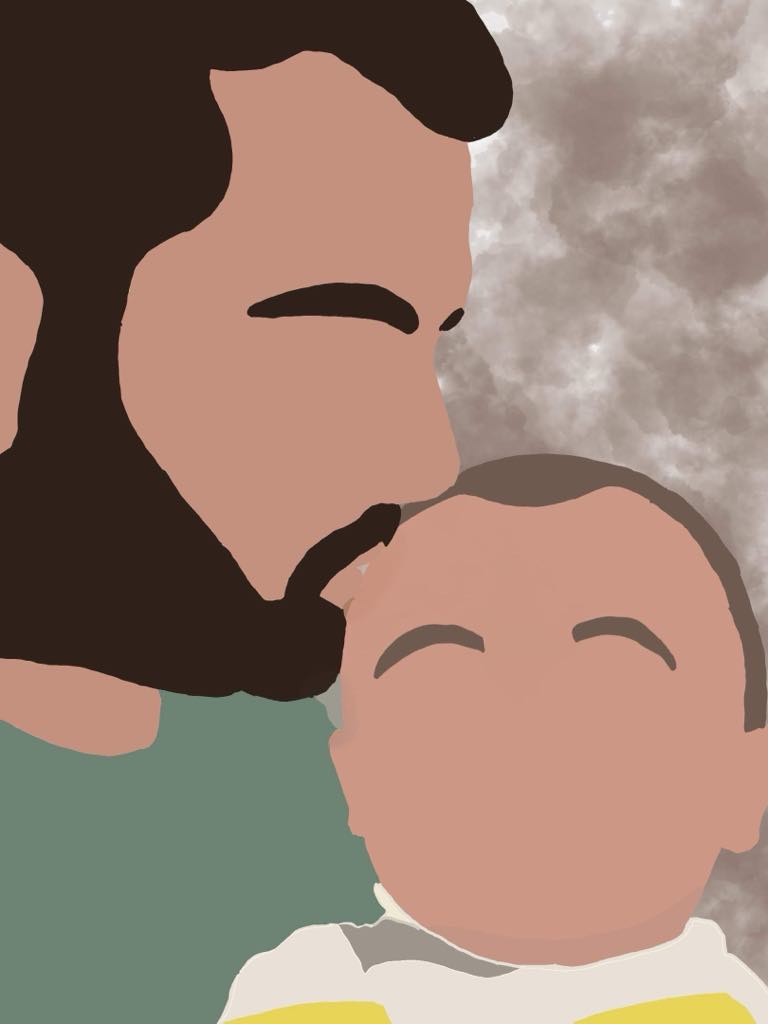
The grief of a father is different from that of a mother—but it is grief nonetheless. No one in a family has the same relationship with the one who has gone on ahead. Every heart breaks uniquely when a child is buried.
Yet in the West, male grief often carries a special stigma. Barbara D. Rosof writes in The Worst Loss: How Families Heal from the Death of a Child,
“For many fathers, the sharpest pain comes from the fact that they could not protect their child. Although mothers and fathers both share the commitment to protect their child, men have been taught that keeping their family safe is their first and most important task. Never mind that so many children’s deaths are simply not preventable; who can stop cancer or sudden infant death syndrome, and who could get every drunken driver off the road? When your child has died, as a father you feel the particular shame and helplessness that comes when you cannot do what you believe it is your job to do.”

Men need to know that it is ok to lament and grieve. Fathers grieve too. They weep. They struggle. They bear the unbearable weight of burying a child.
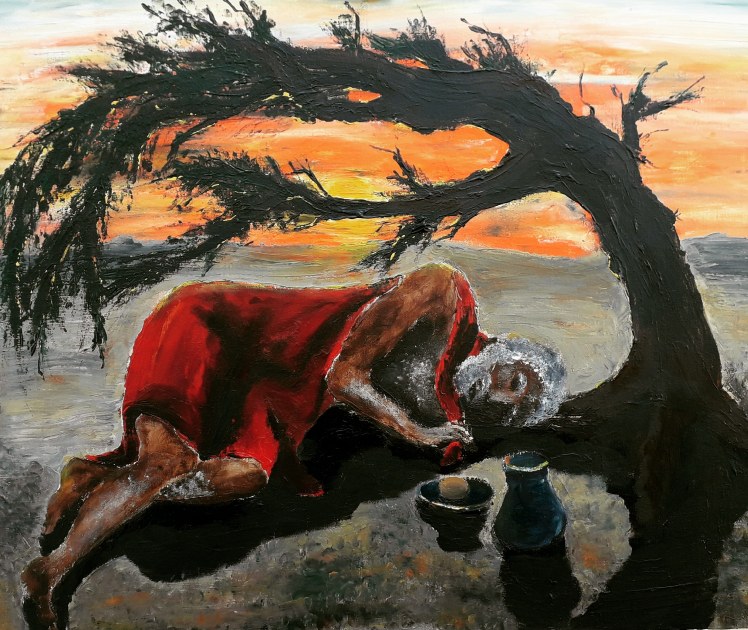
Scripture gives us a powerful example in King David—a man after God’s own heart. In 2 Samuel 12:19–23, after being told his child would die as a consequence of his sin, David fasted, wept, and pleaded with God. When the child died, his servants were afraid to tell him, but David realized what had happened. He rose, washed, worshiped, and ate. When asked why, he explained: “While the child was still alive, I fasted and wept, for I said, ‘Who knows whether the Lord will be gracious to me, that the child may live?’ But now he is dead. Why should I fast? Can I bring him back again? I shall go to him, but he will not return to me.”
David’s lament and faith show us that grief is not weakness—it is love in pain. Let fathers grieve. Let them weep. Let them worship.
And that baby would not be the only son David would lose. Years later, his rebellious son Absalom was killed by a trusted military commander. Absalom had turned against his father, yet David still loved him deeply. When David learned of his death, Scripture says: “And the king was deeply moved and went up to the chamber over the gate and wept. And as he went, he said, ‘O my son Absalom, my son, my son Absalom! Would I had died instead of you, O Absalom, my son, my son!’” (2 Samuel 18:33)
What father does not long to take the place of his child? It should have been us, not them. Take me instead.

Frederick Buechner writes of David’s cry: “He meant it, of course. If he could have done the boy’s dying for him, he would have done it. If he could have paid the price for the boy’s betrayal of him, he would have paid it. If he could have given his own life to make the boy alive again, he would have given it. But even a king can’t do things like that.”
This Father’s Day, if you’re hurting and trying to keep a stiff upper lip, remember: you don’t have to. David didn’t.
We can worship and weep. We can worship while we weep.
We are not failures because we buried our children instead of them burying us.
They have not been wronged by going ahead of us to our heavenly Father—who somehow loves them even more than we do.


 Austin's Blog
Leave a comment