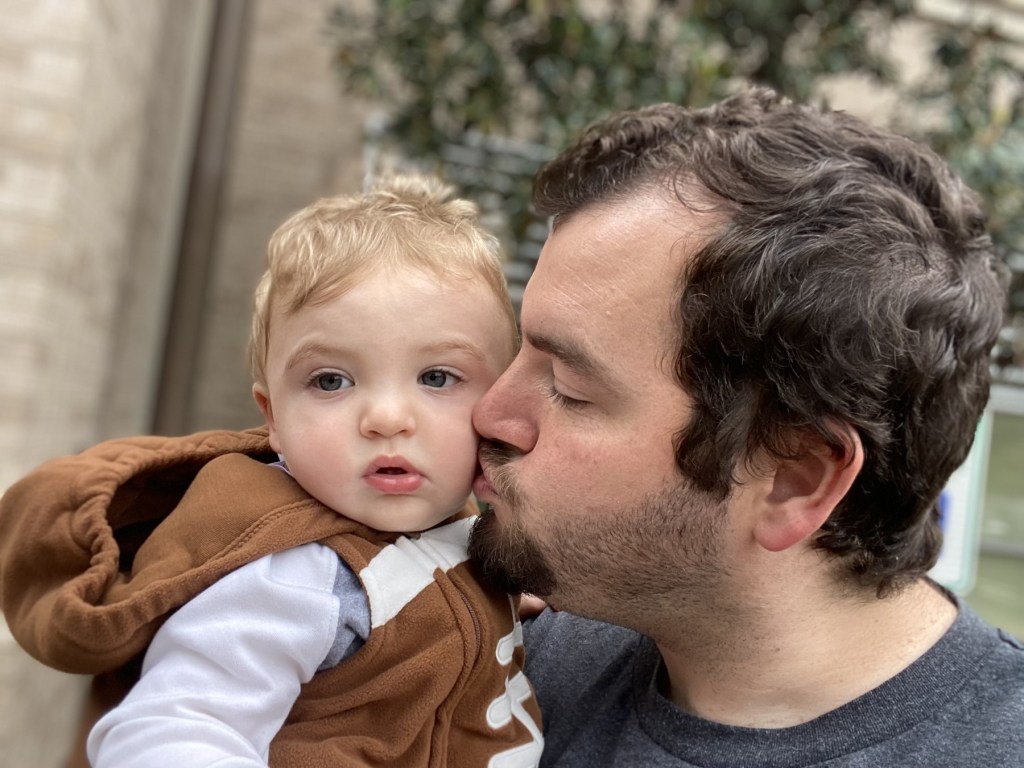

Someone asked me recently how I would describe my grief now at almost three years after losing my son. There’s definitely a difference between what I experienced early on and what it feels like today. It isn’t the same intense, raw, wild, all-consuming, threatening, guttural, ground-shaking grief it once was. I no longer feel as though I might collapse under its mammoth weight. But grief remains. It’s like a deep pit that sits in my stomach or a Gabe-sized hole carved into my heart.
I rejoice over other people’s children as they grow and reach milestones, but silently lament that my precious son never made it to those same benchmarks because death took him. The grief stays there in the background, like an underground stream carving out a cave in the Alabama limestone. It is quiet but constant. I don’t weep as much now, but occasionally it bubbles up.
Fellow bereaved parent and Christian philosopher Nicholas Wolterstorff describes this change so well in Lament for a Son: “Rather often I am asked whether the grief remains as intense as when I wrote. The answer is, No. The wound is no longer raw. But it has not disappeared. That is as it should be. If he was worth loving, he is worth grieving over. Grief is existential testimony to the worth of the one loved. That worth abides. So I own my grief. I do not try to put it behind me, to get over it, to forget it… Every lament is a love-song.” That resonates deeply. I, too, have learned to own my grief. It no longer feels like something to conquer or escape, but something sacred that bears witness to the worth of my son.

When asked how his grief has changed, Jerry Sittser, who also lost a child (and his mom and wife in the same moment), writes in A Grace Disguised: How the Soul Grows through Loss: “No, I have not recovered, but I carry the loss more lightly. No, it is not easier or harder; it is both. No, my life is not better or worse, but different. Nothing in me is the same, except the essential me that carries on, even in the change.” That’s how it feels. I haven’t “recovered.” The loss hasn’t vanished, but I carry it differently. My life is not better or worse. It is simply different. I keep walking, changed but still me.
Sittser captures another layer of this reality when he says: “So much beauty and so much pain. Neither has lessened in intensity. If anything, the opposite is the case. Shock no longer dulls my senses and erodes my sensibilities. Life keeps coming at me, like snow flying at my windshield while driving on a winter night. I am learning to live in that tension and embrace the paradox. Beauty is all around me. I am training my eyes to see it and my soul to absorb it. Yes, life is good.” That’s the paradox I live in too. Both beauty and pain intertwined. The shock has faded, but not the dull ache or the wonder.

And perhaps the best description of how grief feels now comes from Kim Nolywaika in Never Ceasing: God’s Faithfulness in Grief: “The sorrow gets quieter, burrows deeper, becomes part of me rather than something I do battle with. Whereas once I thought my heart would explode with pain, I now feel it threatening to implode, to collapse under the stealthy grip of Sadness.”
Yes. The sorrow is quieter now, but it runs deeper. It has become part of me. I no longer fight against it. I live with it. It’s not the enemy but a reminder of love that endures. Grief has changed, but it hasn’t left. It has settled into my bones, into my faith, and into my daily life. And somehow, by God’s grace, I’m learning to carry on until I see my precious Gabriel again.


 Austin's Blog
Leave a comment