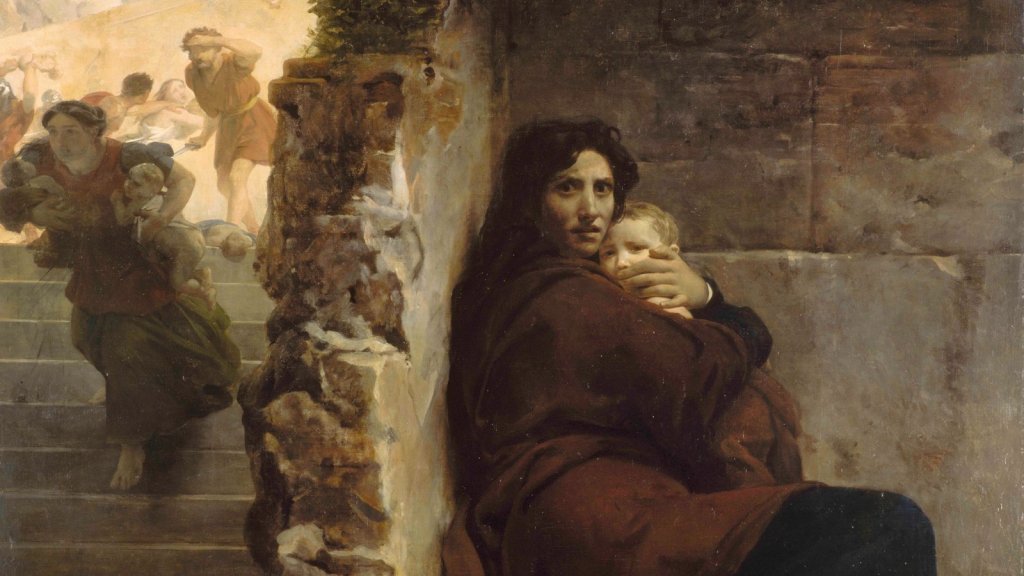
“A voice was heard in Ramah, weeping and loud lamentation, Rachel weeping for her children; she refused to be comforted, because they are no more.” Matthew 2:18

GriefShare’s Surviving the Holidays program states, “Christmas is for the grieving.” The holiday season is often filled with joy, family, and decorations. For the bereaved, it feels as if you have ashes in your mouth and a hole in your heart. Empty seats remind you of the fullness that once existed or fullness that never did. How, then, is Christmas for the grieving? The actual Christmas story (not the sanitized version on TV) contains quite a lot of darkness, grief, and pain. And that is a strange encouragement! Grief is not a seasonal issue. It lasts and has been present among God’s belabored people from the beginning.
One of the most heartrending aspects of the Christmas story is one that makes us the most uncomfortable: the massacre of the innocent. Upon hearing that he had been outwitted by the Magi, Herod became furious and ordered the killing of all the male children under two (Matt. 2:16). Some have questioned the historicity of this moment since it isn’t mentioned in extrabiblical sources, but it fits with what we know of Herod. He murdered family members, religious leaders he disagreed with, and committed other atrocities. This is why Caesar Augustus quipped, “It is better to be Herod’s pig than his own son.” Furthermore, the number of children murdered would have been around twenty (though the death of one child is an unmitigated tragedy!), which likely would not have made the papers outside of Israel.
Most curious, Matthew quotes Jeremiah 31:15 as fulfillment of the massacre. “A voice was heard in Ramah, weeping and loud lamentation, Rachel weeping for her children; she refused to be comforted, because they are no more.” What is the context of this verse? Rachel, who is considered the mother of the nation of Israel, weeps over the Israelites from the grave in Ramah as they are carried off into exile by God’s enemies. The pain of exile was deep enough, but worse yet was the separation of Israelite children from their parents. Losing your home is one thing; losing your home and your children is utter desolation. Rachel stands like a bereaved mother alongside a dusty road, weeping and wailing nonstop as her children are led away.
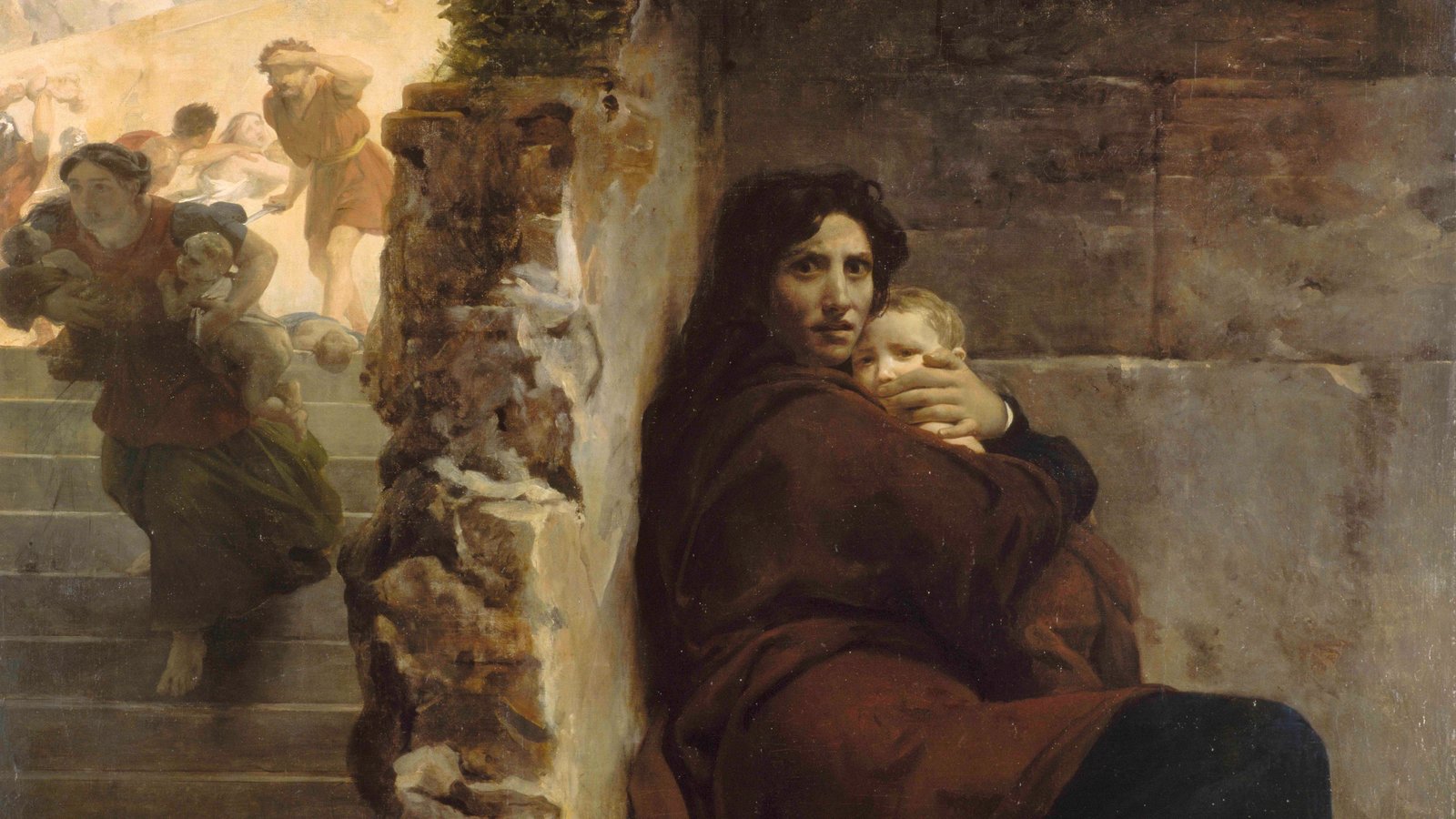
Matthew understands that the pain of child loss is akin to the pain of exile. Leon Morris notes, “Nothing can alter the fact of the exile and nothing can alter the fact of the killings at Bethlehem. Thus the grief remains.” He sees the pain felt by these parents through the lens of Israel’s pain of losing it all through exile. How should they respond? They ought to lament. It is appropriate to lament the loss of life, even during the Christmas season.
Jesus is pictured as a new Moses who will defeat the murderous Pharaoh and deliver God’s people safely back home to the Promiseland. Like the Israelites, He is driven to Egypt. But, unlike Moses, Jesus will not just lead God’s people out of a physical exile, but out of the far country of death. Those weeping Bethlehemite women and the grief of Rachel find their ultimate answer, not in the pain of loss, but in the entrance of the Savior. Into such a dark and daunting world where suffering is felt in our bones, the Savior takes on flesh and delivers us from our cosmic exile from God’s presence. In Jeremiah, the Lord promises those bereaved, exiled mothers, “Keep your voice from weeping, and your eyes from tears, for there is a reward for your work, declares the Lord, and they shall come back from the land of the enemy. There is hope for your future, declares the Lord, and your children shall come back to their own country (Jer 31:16-17).”
If you’re struggling this Christmas season, be encouraged that you don’t have to put on a fake smile and simply soldier on. Christmas is for the grieving, and it has been from the beginning. God’s Son, who escaped the tyrannical grip of Herod and Satan himself, has gone on before us into death and come out on the other side. He identifies with us in our suffering and sorrow. Craig Keener writes, “To broken people wounded by this world’s evil, Jesus’ sharing our pain offers a consolation deeper than reasoned arguments: God truly understands and cares—and paid an awful price to begin to make things better.” Though we face heartache that takes our breath away in our own Bethlehems, we can be assured that the Lord is near, He has not forgotten us, and He will swiftly return to bring us fully and finally home.




 Austin's Blog
Leave a comment