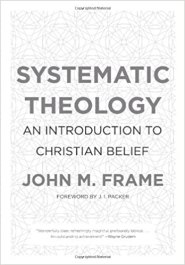
 Presbyterian theologian John M. Frame argues much like other Reformed theologians that Scripture is covenantal at its very nature. It is a binding document between the Creator and his creaturely servants. The authority of the text then is derived from its source, the God of the universe. Dr. Frame writes:
…Old Testament revelation is covenantal. It is an aspect pf Israel’s relationship to her Lord. The Lord-servant relationship is a relationship in which language is essential. The Lord sets forth the terms of the covenant in words; the servant accepts these and abides by them. Without words, there can be no covenant, no Lord. Further, in a covenant, the words take on permanent form, in writing, and they are preserved from one generation to another. So the very nature of covenant implies that there will be written revelation, and that that revelation will have the same power, authority, and divine presence as direct, personal revelation from the covenant Lord. So the written words of the OT are the personal words of God to his people.[1]
He goes on to extend that same covenantal jurisdiction to the writings of the New Testament by examining Jesus’ view of himself, the apostle’s word, and the early church’s reception of that word. There is an authoritative, written account for both testaments.
Why do we accept the Bible? According to Dr. Frame, there is a triperspectival basis for human knowledge (i.e. normative, situational, and existential). The normative aspect of our knowledge that Scripture is God’s Word is its own self-witness as the covenantal document from God himself. The situational aspect of our knowledge for Scripture’s authority are the facts and evidences found within it (1 Cor. 15:1-12). Lest anyone believes a thorough examination of the evidences alone will convince someone of belief, the theologian argues:
When someone believes God’s Word with true faith, he or she does not accept it through autonomous reasoning, through the consensus of scholars, or through an independent examination of evidences. We do not believe God because we have subjected God to our tests and the tests of others. Rather, God’s Word is the foundation of our thought. God’s Word is the ultimate criterion of truth and right. It is the judgment of what reasoning is valid and sound…Scripture determines what evidences are to be believed. It is God himself who enables us to accept his Word as our foundation and presupposition.[2]
Both the normative and situational aspects of our knowledge are important within this epistemological endeavor. The Bible is not opposed to evidence per se as long as it is not offered as rival or outside standard-creating evidence.
The third aspect of our knowledge of the authority of God’s Word is the Spirit’s work, which serves as the existential and subjective aspect of our knowledge. He illuminates, witnesses, and demonstrates to our hearts and minds that what we are reading is the truth from God. Without his work, we cannot see the claims and the evidences in their proper light. Dr. Frame asserts:
…he witnesses to the evidence for the truth that is objectively present in Scripture. He witnesses to what is certainly true. His role is to cause faith. His role is to take away our blindness so that we can rightly see Scriptures self-attestation and be convinced by it. He enables us to see the evidence for what it is: God’s clear and certain revelation of himself. He makes us accept Scripture’s self-attestation.[3]
Apart from the Spirit’s work, the authority of the Bible would be rejected without it stripping it of its judicial objectivity in the slightest way. God personally comes to the human mind and heart of its reader to convince them his objective word carries binding weight.
[1] John M. Frame, Systematic Theology: An Introduction to Christian Belief. (P&R Publishing, 2013), 573-574.
[2] Ibid., 668.
[3] Ibid., 678-679.






 Austin's Blog
Leave a reply to austind90 Cancel reply