
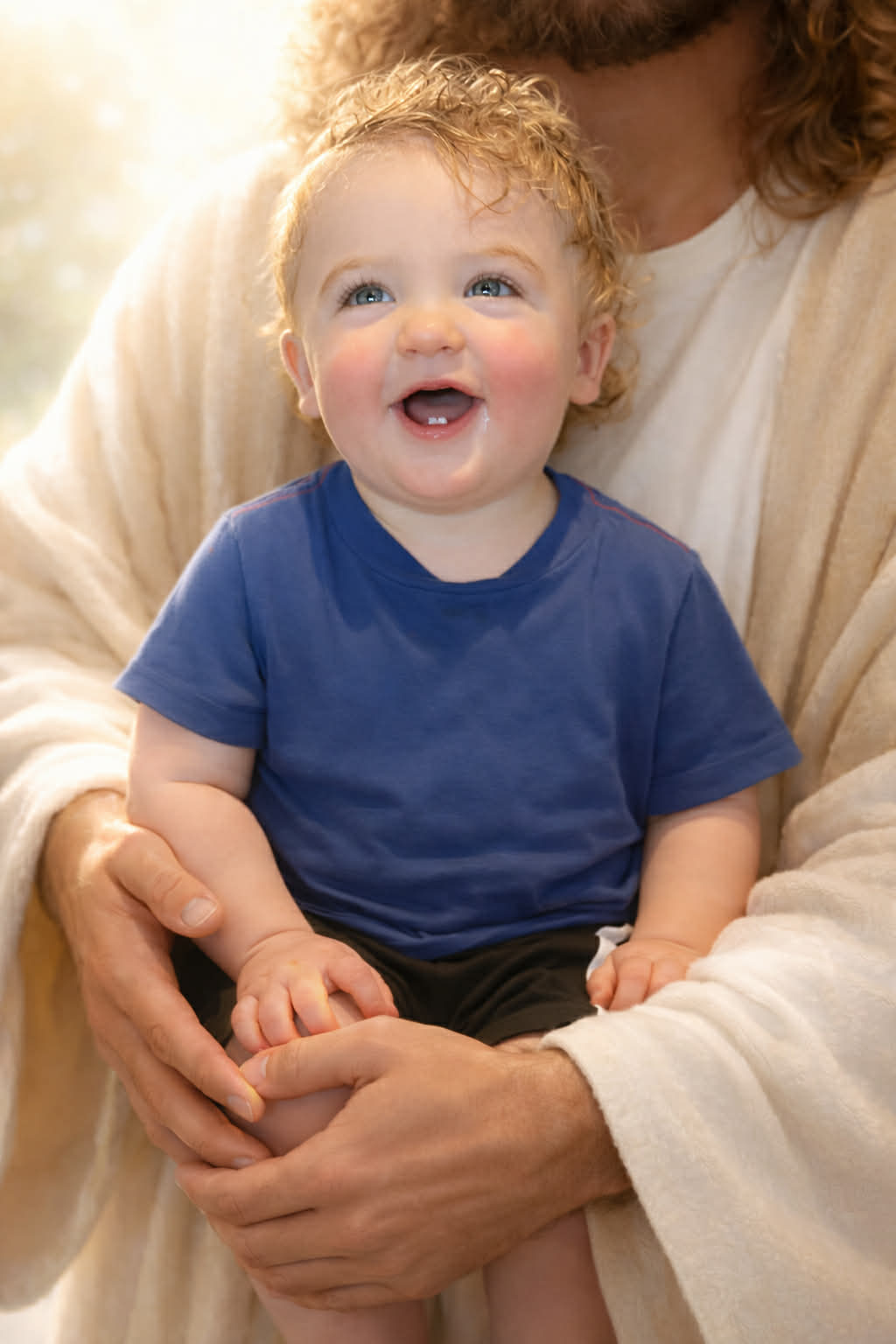
I’m in my mid-thirties now and have witnessed the deaths of many people close to me: my father, grandparents, friends, a mentor, church members, coworkers, and many others. None compare with the loss of my infant son. You’re taught in GriefShare to not compare or rank losses. There’s wisdom in that, for sure. Yet, I can testify that nothing in my own life has affected me more than burying my only son.
There’s a qualitative difference between burying the old and burying the young. A mortician and poet named Thomas Lynch describes this well saying, “When we bury the old, we bury the known past, the past we imagine sometimes better than it was, but the past all the same, a portion of which we inhabited. Memory is the overwhelming theme, the eventual comfort. But burying infants, we bury the future, unwieldy and unknown, full of promise and possibilities, outcomes punctuated by our rosy hopes. The grief has no borders, no limits, no known ends, and the little infant graves that edge the corners and fencerows of every cemetery are never quite big enough to contain that grief. Some sadnesses are permanent. Dead babies do not give us memories. They give us dreams.”
In what ways does burying an infant feel different than burying the old?
- You bury the future, not just the past. Those who are older belong to our past but the young belong both to our present and our future. The shared history you grieve with the old simply isn’t present with the infant. The loss seems to stretch forward, not mainly backward, into what would’ve been.
- The relationship was almost entirely promise. Older people have long stories. Infants and babies have just an outline that never got to be. The story appears to have been shortened.
- There are few accumulated memories. Shared memories, stories, and remembrances bring immense comfort when the old die. There’s just so few of these when the casket is tiny. You end up with snapshots instead of stories.
- The grief is disorienting because it violates expectation. No death is natural. It is the outrage of the universe. But, the death of the elderly is often expected. The death of a child feels inverted. It is a keen abomination.
- You grieve milestones that never happened. Every future birthday is a sad reminder that they are “forever” age whatever. They did not make it to birthday or age “X” in this life. Life is made in milestones and there are so few. Oftentimes, it is their birth and then their Heaven date which forever delimitates your life.
- The loss is developmental. It grows as you grow. By the time you lose a parent or grandparent, your life is somewhat “fixed” or “contoured” around certain passions, convictions, and hobbies. With the loss of a child, you continue to discover new aspects of what you lost as you grow and develop.
- The identity loss is acute. You’re no longer the parent of a baby. You’re often unintentionally removed from the young mothers group because you represent the worst thing that could happen. You have lost the lived experience of parenting a child over time.
- Silence replaces anticipated noise. A home with the noises of infants is now silent. There’s crying alright but the tears are on an adult’s face instead of a baby needing swaddling, food, or a diaper change.
- Dreams must be dismantled. Kindergarten graduation, nursery design, who will take care of me when I’m old, teaching them to ride a bike, reading bedtime stories, and much more are gone like the morning fog. The demolition is ongoing, especially as you watch others enjoy these dreams come to fruition.
- Social acknowledgment can be thinner. Honoring the older seems easier for people. They usually just don’t know what to say or do when a baby dies. The result is they are paralyzed into silence and inaction.
- The grief feels borderless. The caskets are small, but the sorrow fills the whole sky and is as deep as the ocean. It feels untamable.
- You lose who they were becoming. You can say, “This is who they were” when they are older. “This is who they would’ve become” is how you’re forced to speak when they’re babies.
- The imagination becomes both gift and torment. What they might’ve looked like, sounded like, and acted like all become a source of holy curiosity and quiet sadness. AI can do a little here, but we know it is fake. There’s no substitute for the real thing.
- The theological questions often feel sharper. Nothing has made me wrestle more with evil than the ongoing suffering and death of children. Those not wrestling with the problem of evil associated with infant and child loss are usually just burying their heads in the sand like ostriches. The discussion rarely remains in theory. It is ashes upon your tongue.
- The grief often feels permanent rather than cyclical. Grief around older people oftentimes softens into quiet gratitude over a full life lived. This is removed when they die young.
- You mourn what they never got to experience. Their marriage, their graduations, their academic successes, their wins on the basketball court, and so on and so forth.
- Your love has nowhere to go. The love of a parent is forward-moving. It is meant to instruct, guide, and fill the lives of your little ones until and as they move into the world. When they die, the love is there but doesn’t feel like it has anywhere to go except running down your cheeks. Tears are liquid love pouring out.
- The grief is largely invisible. You’re culturally permitted a time to grieve your loved ones. Grief over a child feels somewhat stigmatized and culturally rushed. “Just pretend like they never existed and move on.” Never! You close bank accounts, not love accounts.
- The relationship was pure dependence. When they’re older, they stand on their own footing. An infant is completely dependent upon you. You don’t just lose a child; you lose your job if you’re the main caregiver.
- The world moves on at a normal pace. The loss of a child results in life being forever altered in a way that is different when a parent or grandparent dies. Nothing is ever the same, including yourself. How could it be?
James W. Bruce III writes, “Small coffins are placed in the ground, but more than the body is buried. Parents also bury all the hopes and dreams they had for those children. The mother buries the lullabies she would have sung, the little clothes, the first day at school; the father buries the baseball glove and the thoughts of playing catch—all the things they see other parents doing and had hoped to do with their own sons and daughters.” There’s a reason this feels different.



 Austin's Blog
Leave a reply to blazecrafty948f9a8841 Cancel reply